| | Episode #8 The VoiceAISpace Newsletter | |
| | | 3 × News
2 x Product
1 × Spotlight
Space Updates | |
|
|---|
03 | News The Good, The Bad & The Funky |
| | Busan City, South Korea, launched a pilot of its "Busan Childcare Voice Bot" on August 3, 2026. The AI-powered phone service lets parents call a single number (1551-1265) at any hour, any day of the year, to get consolidated childcare information that was previously scattered across six separate categories.
The interaction is straightforward: a caller states their child's age, preferred care time, and location. The bot processes that input and immediately sends a customized summary via text message to the caller's phone. No app, no login, no office hours required.
The six programs now unified under one call include in-home childcare, hourly childcare, 365-day open daycare centers, community children's centers, shared childcare centers, and after-school academies. Before this, parents had to hunt across multiple sources and were effectively locked out of support during nights, weekends, and holidays.
Busan City frames the initiative as a potential model for other local governments across South Korea.
Why we like it:
This is voice AI doing exactly what it should: removing friction from a high-stress, time-sensitive task for people who cannot wait for a government office to open. The phone-call-to-SMS handoff is a clean, practical design choice that meets parents where they already are.
| |
| | A Hillsborough County, Florida woman lost $15,000 after scammers used AI voice cloning to impersonate her daughter on a phone call. The cloned voice was sobbing, claiming to have hit a pregnant woman while texting and driving. A man then came on the line posing as an attorney and demanded $15,000 cash for bail, with specific instructions not to tell the bank what the money was for. A driver arrived at the woman's home to collect it.
The calls did not stop there. A follow-up call claimed the unborn child had died in the crash and demanded another $30,000 to keep the family from suing. The scheme only unraveled when the woman's grandson got her real daughter on the phone. "When I heard her voice, I broke down. She was fine. She was still at work," the mother said. "My husband and I are recently retired. That money was our savings."
The family believes scammers pulled audio from social media videos to build the clone. A report was filed with the Hillsborough County Sheriff's Office. Research cited in related coverage notes that AI voice cloning tools can now generate a convincing replica from as little as 3 to 6 seconds of audio, and that scams of this type surged sharply through 2024 and 2025.
Why we're flagging it:
This is the real-world cost of frictionless voice cloning. The technology that powers legitimate voice AI products is the same technology being weaponized here, and the community needs to keep that tension front of mind.
| |
| | CharityEngine launched Copilot on July 30, 2026, positioning it as the nonprofit sector's first voice-driven, agentic AI fundraising platform. The pitch is straightforward: fundraisers talk to it instead of navigating a CRM. Ask it to launch a win-back campaign for lapsing donors, build a multichannel push for LYBUNT donors, or draft a grant proposal from last year's outcomes, and it executes without the user leaving the platform.
The structural argument behind the product is worth noting. CharityEngine says it built its platform as one native system on a single data model, not assembled through acquisitions. Donations, events, email, advocacy, volunteer activity, and payments all live in the same stack. That unified foundation is what the company says lets Copilot act rather than just report.
CEO Philip Schmitz framed the competitive gap plainly: most rivals are fighting both a data silo problem and a tech stack problem at the same time, because they stitched software together and called it unified. CharityEngine claims that gap is structural, not incremental.
The platform is trusted by more than 1,000 nonprofits that have collectively raised more than $10 billion, according to the company. Copilot is available now.
Why we mention it:
Voice-driven agentic AI hitting the nonprofit sector is a real signal that the interface shift is spreading beyond enterprise sales and customer support. The data-model argument is the right one to make: voice agents are only as capable as the system underneath them, and fragmented stacks are the silent killer of most AI copilot rollouts.
| |
Products Voice AI putting in the work | 02 |
| |  | #1 |
AgentCall lets any AI agent join Google Meet, Zoom, and Microsoft Teams as a full participant. It speaks, listens with live speaker-diarized transcripts, reads chat, raises its hand, shares screens, and leaves when instructed. Setup takes under two minutes and works with your existing stack.
Three participation modes cover most workflows: audio-only, webpage A/V for branded avatars or dashboards, and full screen sharing for demos and presentations. Pricing starts at $0.35/hour, with a free tier including six hours.
Why we like it:
The bring-your-own-stack approach is refreshingly practical. If you already have transcription or TTS providers you trust, you only pay for the meeting bot itself. Privacy is equally sensible: reasoning stays local, transcripts aren't stored server-side, and AgentCall states it doesn't train on meeting data. | |
| | |  | #2 |
Heard is a macOS voice layer that narrates what your AI coding agents are doing. It works with Claude Code, Codex CLI, Codex App, and anything else via a wrapper command, so you can step away from your screen without losing track of long-running sessions.
It offers three listening modes: Co-pilot for quick updates, Companion for eyes-off situations, and Focus for alerts only. Multiple agents get distinct voices, and four built-in personas can be customised with simple Markdown files.
Why we like it:
The Apache 2.0 open-source core means you can self-host, use your own ElevenLabs or Anthropic keys, or even switch to the local Kokoro TTS engine for maximum privacy. The free tier is generous, while paid plans add hands-free voice control.
Disclaimer: as much as we wish to test all the cool stuff we come across, we've been slightly too busy to test the ones above. | |
|
|---|
01 | Spotlight Florent de Goriainoff, CEO @ fluents Interview |
 |
| | Florent de Goriainoff is the CEO of fluents, a real-time Voice AI startup. His path to the space runs through two decades of hands-on infrastructure work, from configuring Cisco CallManager deployments across European data centers, to an eight-year run helping build Google Cloud, to a formative stint at Vocode. That breadth of experience, spanning VoIP, Big Data, and enterprise software, is the foundation fluents is built on.
How did you end up in voice?
I started my career in Europe working in networking, telecommunications, and security. I acted as a forward-deployed engineer (before it existed), managing and configuring Cisco CallManager deployments across various data centers. Wanting to expand my horizons, I transitioned from pure infrastructure into software, specifically focusing on Big Data and Business Intelligence. My company was eventually acquired by Zendesk, which brought me to San Francisco. This led to an incredible eight-year tenure helping build Google Cloud. While Google was phenomenal, my ultimate goal in the US was always to launch my own company. After a brief stint at Vocode, I realized that real-time Voice AI was the perfect convergence of my entire background. Today, I am combining my deep expertise in VoIP applications with my passion for solving complex infrastructure challenges to build my own startup.
What's your struggle or moment of joy with voice?
While the infrastructure behind real-time Voice AI is incredibly demanding, my true joy doesn't come just from building the technology, it comes from the customer. My main focus now, as it has been throughout my entire career, is rolling up my sleeves and working directly with clients on practical, real-world use cases. Voice is the most intuitive interface we have. There is something deeply rewarding about taking highly complex backend infrastructure and transforming it into a seamless, natural conversation. Building the tech is the challenge, but seeing it instantly solve a massive operational bottleneck for a customer... That is the joy.
Where do you think voice is going?
1. Chained architectures will eventually disappear. Native audio-to-audio models are the new standard, becoming increasingly domain-specific, lightweight, and blazingly fast.
2. While adoption feels slow today due to deployment friction, tooling and cost curves are improving exponentially. Voice AI will soon transition from a novelty channel to core enterprise infrastructure.
3. I am incredibly bullish that voice will reclaim its position as the default human-machine interface. We're already seeing developers "vibe coding," and this will scale to everything from embedded systems to automated checkouts. | |
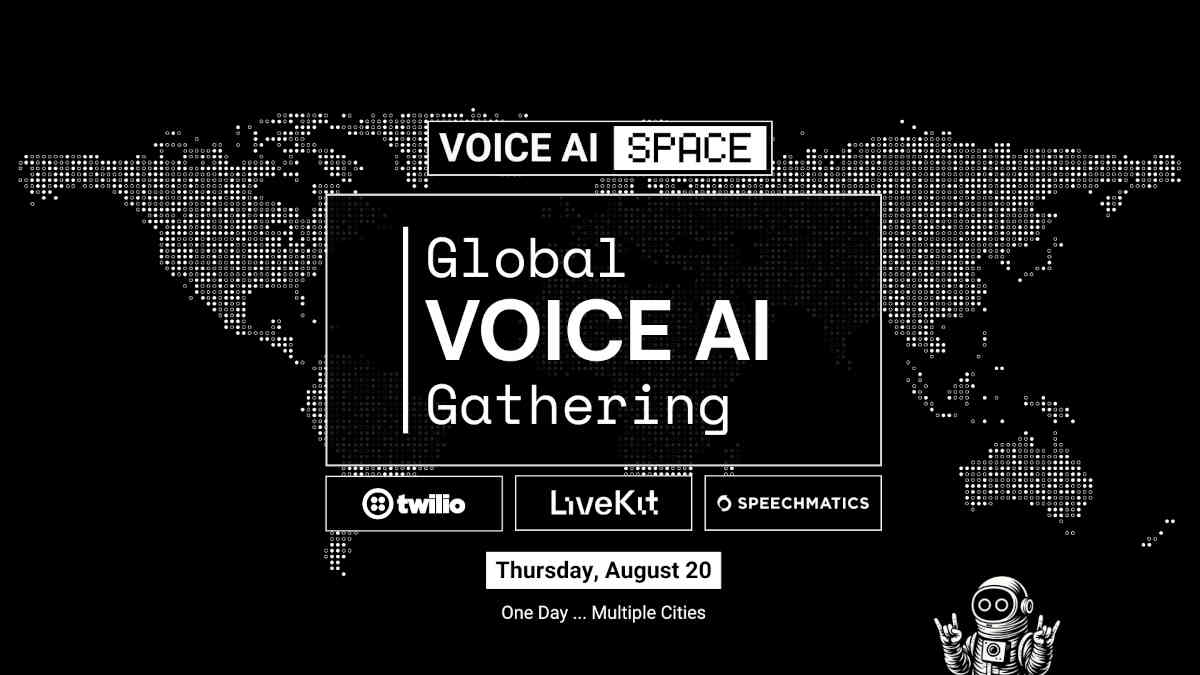
| | We are shooting a global event … On the same date in London, San Francisco, Paris, Melbourne, Barcelona, Bengaluru, Dubai, and Toronto, we're creating rooms for people to meet around a shared passion: voice tech.
It's a special event, different from the one we did before: no demos, no talks… just networking.
For this first edition, we're glad to have Twilio, LiveKit, and Speechmatics supporting us.
A huge thanks to all the hosts—we'll share more about them in the next edition ;) | |
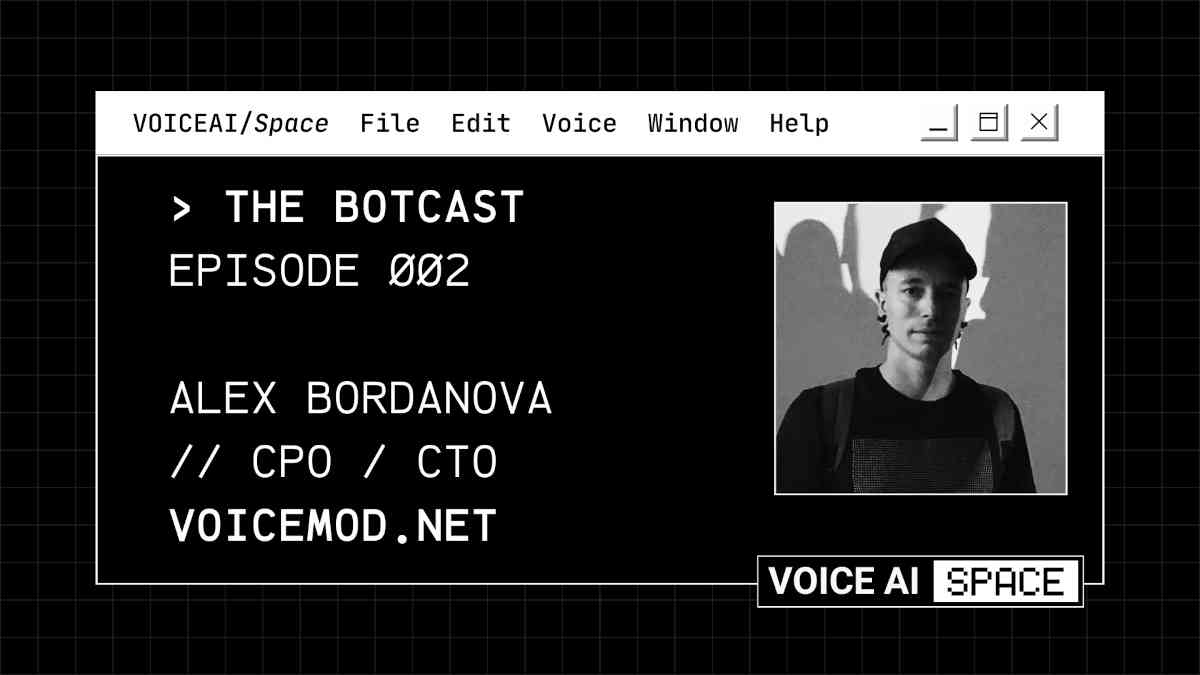
| | The BotCast Episode 2 is out | |
| | Companies can now submit their update, release … on the voice ai space platform here. | |
| | Support & Share Enjoyed this newsletter? | |
| | Please share it with others interested in Voice AI, it helps us more than you think! You can also share it on X or LinkedIn. If you have a Voice AI story yourself or a Startup you are building that you wish to share, feel free to ping us. Have a lovely morning, day, evening, or night wherever you might be.The Voice AI Space team | |
| | The Voice AI Space is open & free thanks to the support of a few companies in the ecosystem, thank you to them: | |
|